

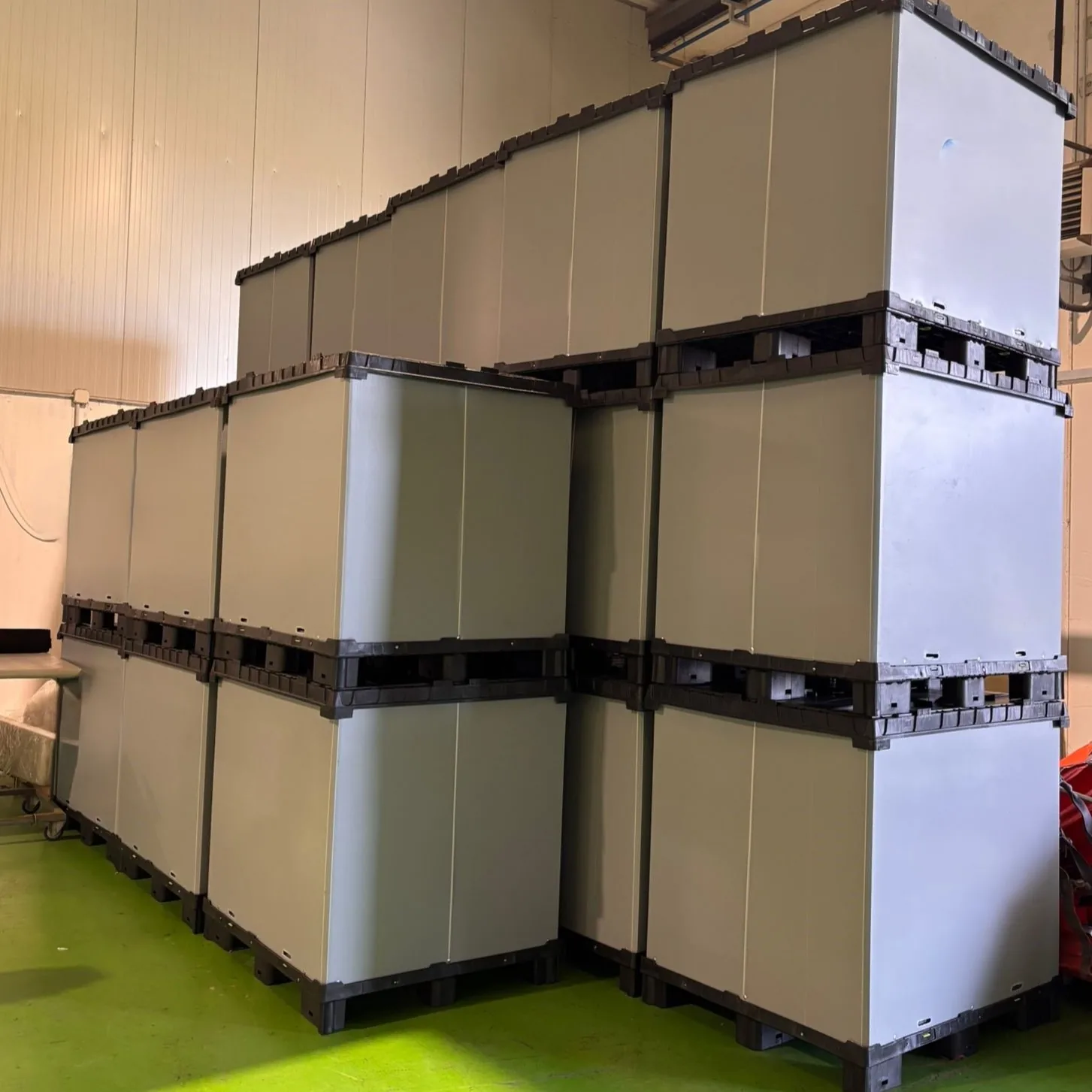
Talk to us about your project
IT|EN
Alveol-Box: custom textile interiors for pallet boxes and containers

Alveol-Box custom textile interiorsfor pallet boxes and containers

Reusable industrial packaging solutions to organize, separate and protect components. Custom textile compartmentalization is developed considering part geometries, container and handling methods.
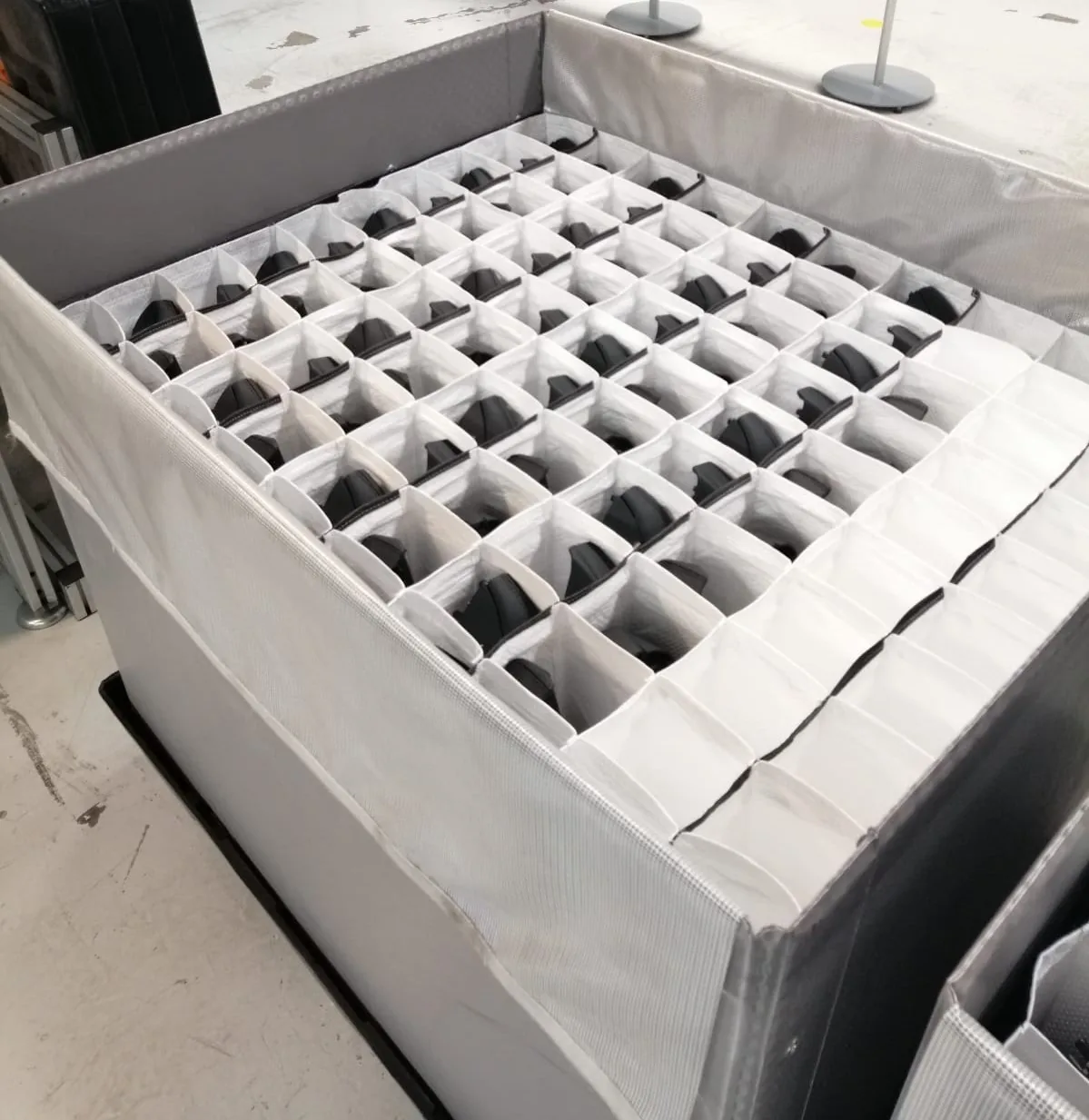
Every component has its own space, even inside the container

The choice of container is part of the project. To manage components during handling and storage, it is necessary to assess how they are arranged inside it, which surfaces come into contact and how loading and picking take place.

Alveol-Box uses custom textile interiors to create dedicated compartments for the parts. Dimensions and layout of the compartments are defined according to component geometries and the space available in the pallet box or container.

The configuration considers the quantity to hold, contact points and conditions of use. The system is developed for reuse within the intended logistics cycle, with materials selected according to the application and operating conditions.

For containers already in use at the company, compatibility must be verified through internal dimensions, construction characteristics and requirements of use.

Compartmentalization starts from the parts to be held

Custom textile compartmentalization is designed considering the shape and dimensions of the components, the number of parts and access methods. The layout of the compartments must allow the components to be placed according to the intended configuration and handled during loading and unloading.

The technical discussion covers the structure of the container and the logistics cycle: where it is used, how it is handled and how the interiors are managed when the container is empty.

If the cycle includes the return of empty containers, it is also useful to assess how the interiors are managed in this phase. Folding or reconfiguration options need to be explored on the intended version.

Materials to be chosen according to the component

The choice of interiors depends on the surfaces to be preserved and on the requirements of the application. Materials and configuration must be assessed together, considering contact with the parts and conditions of use.

Standard

Materials to be assessed for organization, separation and protection according to requirements.

ESD

Materials for applications with specific electrostatic characteristics, to be verified against technical requirements.

Surface-Safe

Materials to be assessed for components with delicate surfaces, aesthetic finishes or contact-sensitive parts.

Case Study

Reusable packaging for pallet boxes: an Alveol-Box application

Reusable packaging for pallet boxes
Case Study 1

Reusable packaging for pallet boxes

01

Il problema

Cardboard, polystyrene and bubble wrap are purchased, used once and then disposed of with every shipment: a cost that repeats every cycle, not to mention components that arrive at their destination displaced, unprotected or hard to identify when the box is opened.

02

La soluzione

A custom textile insert applied directly to the pallet boxes or collapsible containers already in use at the company, without modifying the outer structure. Two variants available: a fixed pocket for the specific component, or an accordion system with sliding dividers that adapt to the size of the part.

03

Il risultato

Components secured, separated and identifiable throughout transport. The system is washable and reusable: single-use packaging is no longer needed for each shipping cycle.

Do you want to assess Alveol-Box for your components?

Describe the parts to be held, the surfaces to be preserved and the container used or planned.
Photos, drawings and dimensions help us explore the custom textile compartmentalization to be assessed.

Describe your need
Request Information

Let's talk about the interiors for your container

Tell us which components need to be organized and how the container is used. You can attach photos, drawings or technical specifications to make the request clearer.

Useful information: dimensions of the parts, quantity to hold, finish, internal dimensions of the container and any ESD requirements.


    Optional. Formats: JPG, PNG, PDF. Maximum size: 10 MB.